On the edge of Tacoma’s industrial corridor, where the city meets the Port, manufacturers are actively shaping what growth, investment, and workforce development can look like in a moment filled with possibility. When Urban Accessories opened its doors to me for a site visit, the intention was to share its work. Instead, we shared a meaningful exchange between peers that highlighted the innovation and collaboration driving today’s manufacturing landscape. Urban Accessories, a third-generation family-owned business, has built its reputation on craftsmanship.
The company transforms metal and wood into detailed designs that serve outdoor and landscape spaces. As the business continues to grow, it is leaning into new opportunities to expand its capabilities while staying grounded in the quality and skill that define its work. In recent years, that growth has included a more intentional approach to workforce development. Through connections with Workforce Central and broader workforce trainers such as IMPACT Washington, Urban Accessories has accessed grant-supported training opportunities designed to strengthen its team. These investments have included Lean Six Sigma White Belt and leadership training, helping to build both technical and leadership capacity across the organization.
As a company of just over 60 employees, Urban Accessories approaches each decision with care and clarity. Choices about training, equipment, and operational improvements are closely tied to long-term goals around sustainability and expansion. Inside the shop, this is already visible. The company is introducing new equipment and creating pathways for many employees to gain CNC operator abilities, building on existing craftsmanship while expanding technical expertise. Amcor Tacoma also joined the visit, represented by Plant Manager Jackie Johnson. Her experience, which began as a temporary employee and progressed into plant leadership, offered a powerful perspective on growth, advancement, and leading within a complex and evolving organization. As the tour unfolded, the conversation quickly became an exchange of ideas.
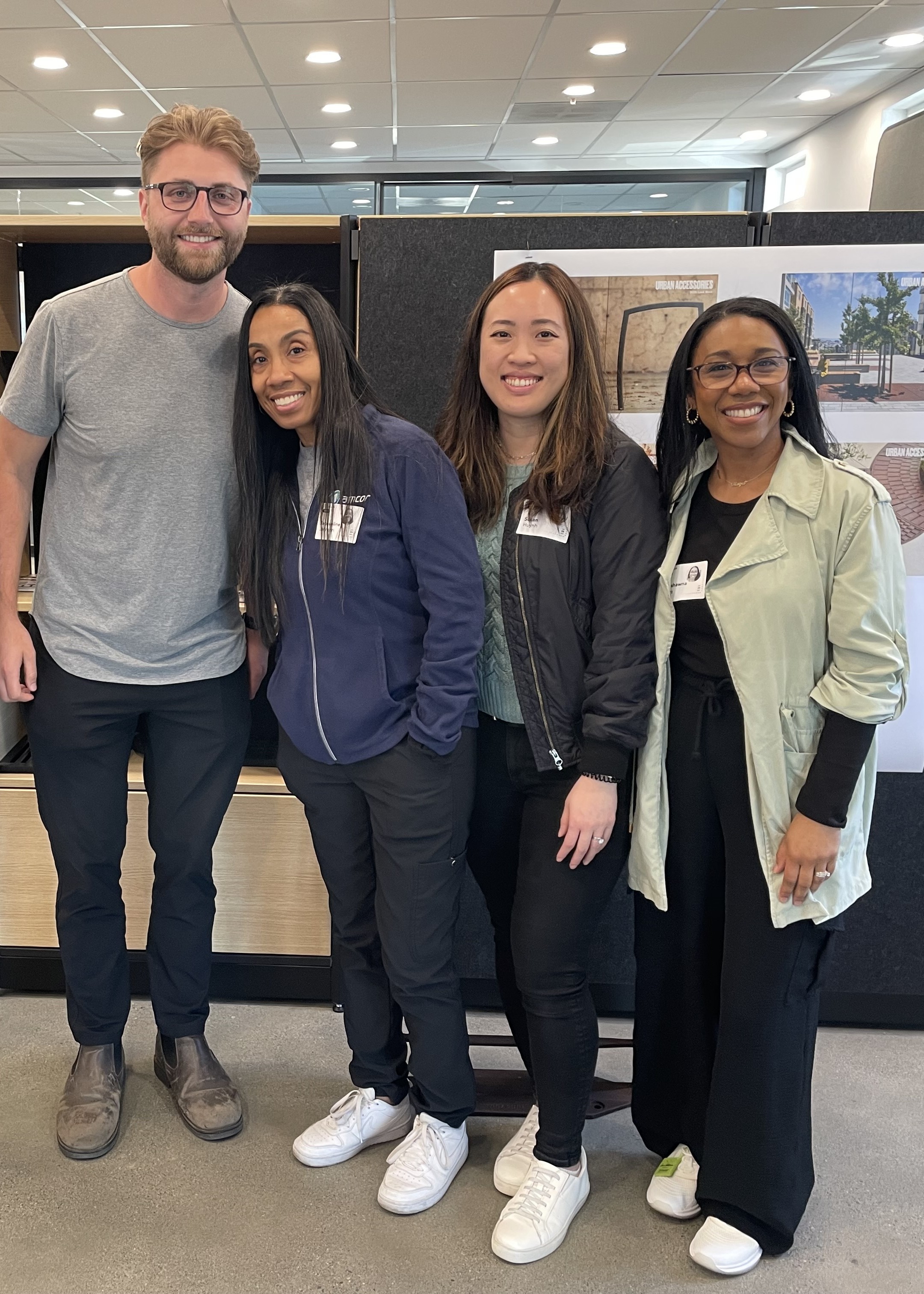
While observing the shop floor, Jackie noted newly posted lockout/tagout procedures on recently installed equipment. She shared the value of reinforcing these protocols through hands-on demonstration, emphasizing that training is most effective when experienced in real time. This insight sparked immediate interest and opened the door for continued collaboration between the two companies. The conversation extended beyond safety practices. Both companies reflected on how they are approaching employee engagement, including how to maintain strong communication and connection while respecting employee time and autonomy. These shared experiences created space for practical problem-solving and mutual learning.
The visit became more than a single interaction. It was the beginning of an ongoing relationship. Intentions are already set for a future visit to Amcor, and connections between staff continue to grow, particularly around operational possibilities. While not always visible as a formal program connection, both Urban Accessories and Amcor are part of the broader ecosystem Workforce Central supports through the Washington Jobs Initiative. Through hiring participants and advancing the skills of their current employees, each company is actively engaging in the outcomes this work is designed to support. This is work Washington STEM is actively supporting as the implementation partner for the Washington Jobs Initiative alongside partners. This visit highlights the importance of creating space for employers to learn from one another. While funding and training programs play a critical role, the relationships formed through peer exchange add another layer of impact. Conversations on the shop floor, shared observations, and continued connection all contribute to a stronger and more responsive manufacturing ecosystem.
As efforts continue to build and sustain this work, there is a clear opportunity to expand these types of engagements. By supporting ongoing peer-to-peer learning, site visits, and collaboration, the system can continue to grow in ways that are informed by real experience, shared knowledge, and a collective commitment to progress. This story is part of an ongoing series highlighting my experience in the field as I visit training sites for businesses participating in the Washington State Jobs Initiative. Employers play an essential role in supporting student persistence through this initiative. With each visit, Washington STEM gains inspiration and information to inform our cross-system work — assessing the whole landscape to ensure adult mindsets and power structures evolve in ways that advance equity and opportunity for all participants.
This story is part of an ongoing series highlighting my experience in the field as I visit training sites for businesses participating in the Washington State Jobs Initiative. Employers play an essential role in supporting student persistence through this initiative. With each visit, Washington STEM gains inspiration and information to inform our cross-system work — assessing the whole landscape to ensure adult mindsets and power structures evolve in ways that advance equity and opportunity for all participants.