The co-design process—research with, and for, communities
“…to decolonize and humanize educational research, the work we do must center and sustain the relationships that we have with those who invite us into the work already being done in communities…Who we are matters. The relationships we have to place, people, and space matter. Our identities need to be situated in the stories of others.”
– Dr. Timothy San Pedro, Protecting the Promise: Indigenous Education Between Mothers and their Children
When it was time to update our State of the Children reports (SOTC) last year, our post-pandemic learning told us we needed a different approach to get at the deeper truths behind the data. Over the past three years, Washington STEM has moved towards a more community-centered, qualitative approach to our research models, sometimes called participatory design research. This process seeks to engage users or beneficiaries of a research question, or product, in the development process through co-design sessions that include deep listening, reflection, and collaborative writing, as well as more traditional approaches such as interviews and surveys. The theory is that by centering community experiences, we’ll collectively understand the deeper issues impacting communities, identify existing strengths, and create community-driven solutions to these problems.
Finding the “why” behind the data: projects in Yakima and Central Puget Sound
From 2020-22, we worked with five Yakima area high schools, using surveys and listening sessions with students, educators and parents to understand the students’ postsecondary aspirations. The results showed that 88% of students surveyed wanted to continue their education after high school. Meanwhile, surveys of educators uncovered that most believed the number was much lower (48%). This 40% discrepancy suggests school staff largely do not have enough information about students’ aspirations to adequately help them plan for what comes after high school.
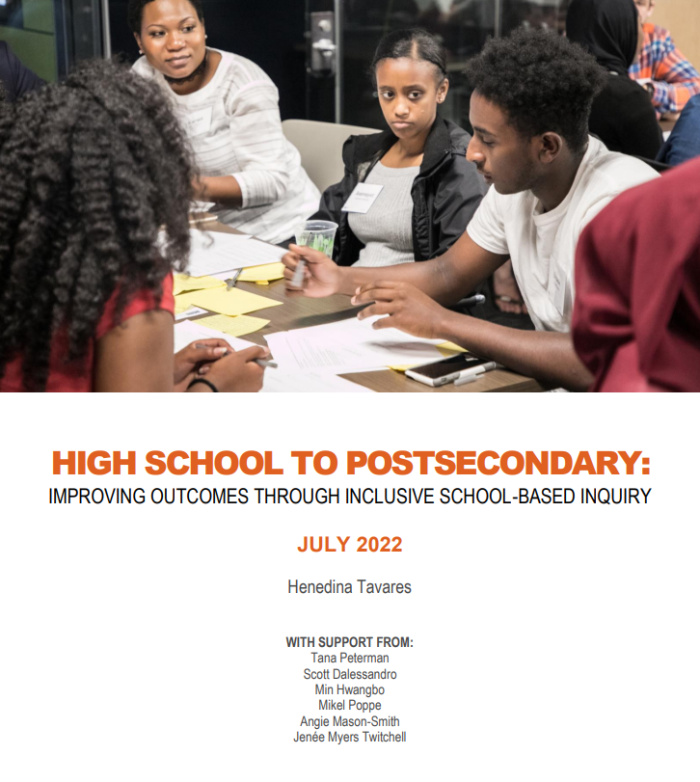
In response to these studies, Washington STEM is now working with 26+ schools across the state to learn about student aspirations and improve access to dual credit and other supports that help propel students into postsecondary pathways. As part of this process, schools will conduct interviews with students, families and staff and examine course-taking data to identify any patterns that should be addressed.
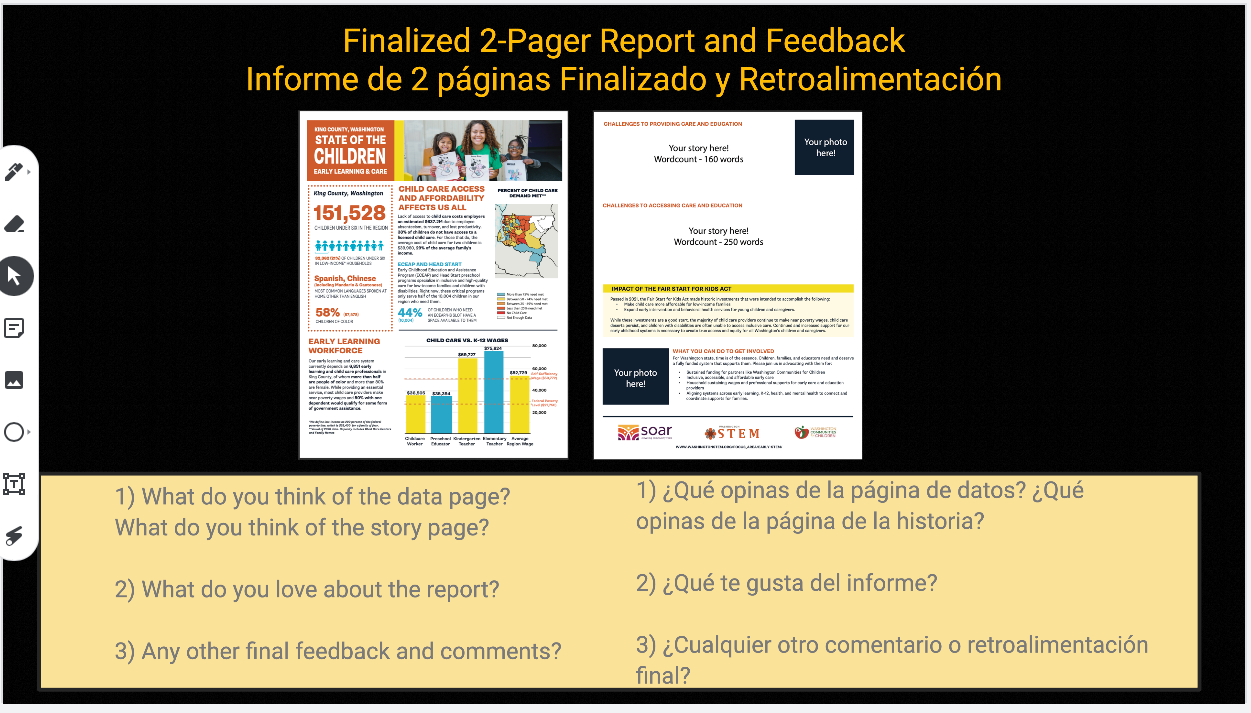
Similarly, in the early learning sphere, we turned to community to co-design the updated State of the Children reports. We asked parents, caregivers, and childcare providers to share their experiences looking for, or providing, high-quality early care and education—the foundation for a successful educational career and lifelong STEM learning. Without them sharing their stories, the data paints an incomplete picture.
But to hear these stories, we needed to form relationships built on trust.
Collaborative Process: from “input” to “codesign”
When the first State of the Children (SOTC) reports were published in 2020, families raising children with special needs said they felt excluded because the data about their experience was not included. Soleil Boyd, Washington STEM’s Senior Program Officer for Early Learning, said, “When it was time to update the SOTC report with 2022 data, rather than simply ask for public comment when we are ready to publish a report, we brought community into the design process.”
“When it was time to update the SOTC report with 2022 data, rather than simply ask for public comment when we are ready to publish a report, we brought community into the design process.”
-Dr. Soleil Boyd
Washington STEM invited 50+ caregivers from across the state, including parents and child care providers, to participate in the co-design process as paid participants. “Part of the community approach is recognizing co-design participants as partners and compensating them accordingly,” according to Boyd.
Over six months, the co-designers attended monthly, two-hour, online co-design meetings. Over half of the participants identified as people of color (African American/Black, Latinx and Asian) and/or Indigenous; fifteen percent also spoke Spanish, so simultaneous translation was included in the sessions. Also, 25% were families with children with disabilities, or providers who care for children with disabilities.
For education researchers, participatory design research and other community-based research methodologies represent a sea change in how data is collaboratively collected, analyzed, and represented.
The result was a stronger focus on relationships and working through an iterative processes. Washington STEM Community Fellow, Susan Hou, said, “We are not making a product, in this case a report, in a short period of time—it is a process, and building of relationships is the result.”
Research that is transparent and relationship-based
In the past, social science and educational researchers have been known to use “extractive” methods of collecting data. Individuals and communities were asked to share their time, resources, and knowledge—usually without compensation. And these people rarely benefited from the research.
In contrast, community-based research values transparency and establishing relationships between researchers and co-designer participants, as well as among the co-designers themselves. This allows for trust to develop so the knowledge shared is more meaningful and policy recommendations are more finely attuned to community needs.
“This allows for trust to develop so the knowledge shared is more meaningful and policy recommendations are more finely attuned to community needs.”
– Dr. Soleil Boyd
Furthermore, what makes community-based research unique is that its goal is not simply to produce data for a report—a deadline-driven process to be sure. Instead, community-based research can be a powerful tool to build social networks, examine and dismantle systems of oppression, such as unequal power dynamics between communities and government institutions. By doing the community work that surfaces these undercurrents, proposed policy changes are more responsive to and better able to address people’s lived realities.
Boyd said, “Washington STEM is using community-engaged research to re-examine how schools, and indeed the entire education system, starting with early learning and care, can better engage our priority populations: students of color, girls, rural students and those experiencing poverty.”
And so far, the results—just like the community—speak for themselves.
Topics